Living in Jumeirah
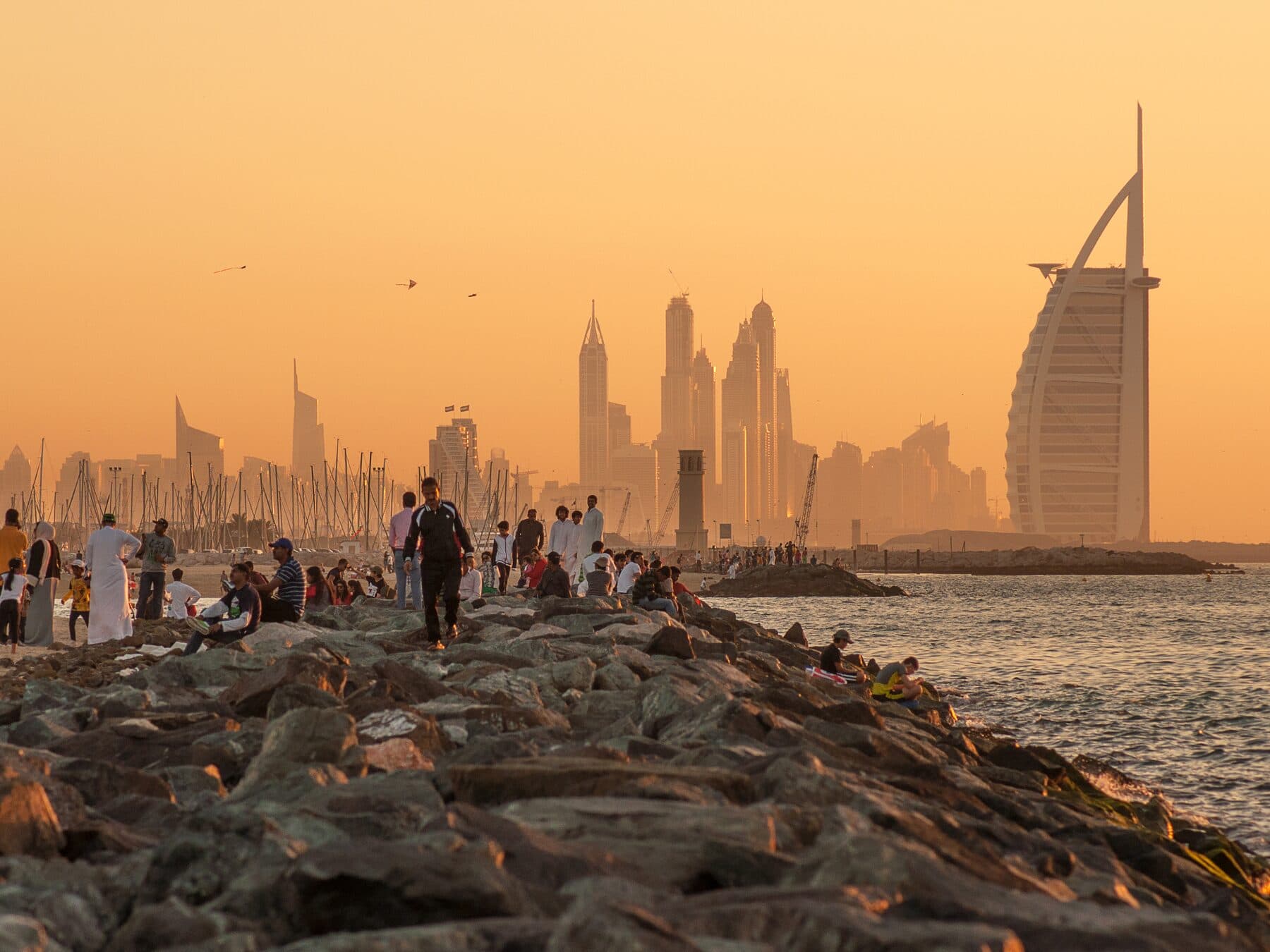
Jumeirah is the strip of established neighbourhoods that runs along the coast south-west of the old city, divided into Jumeirah 1, 2 and 3. It is one of Dubai's oldest residential areas and still feels unlike the newer districts: low-rise, leafy streets of private villas, mosques and neighbourhood shops, with the sea on one side and the towers of Sheikh Zayed Road a short drive inland.
Jumeirah 1, nearest the city, is the busiest part, with La Mer, the Jumeirah Mosque, Mercato Mall and the cafés of Jumeirah Beach Road. Jumeirah 2 is quieter and is crossed by the Dubai Water Canal, while Jumeirah 3 has many of the larger villa plots and runs down towards Sunset Mall and Kite Beach. Al Wasl Road, parallel to the beach road, is lined with cafés, clinics and small shopping centres.
Most residents rent. The bulk of Jumeirah is not a freehold area, so villas are largely owned by UAE and GCC nationals, and expat buyers are limited to designated projects such as Port de La Mer. Much of the housing is decades old and its condition varies widely, and the beach road gets slow at weekends. In return you get a central, settled neighbourhood close to the sea.
- 01
Beaches along the doorstep
La Mer, Jumeirah Beach Park and Kite Beach are all on this stretch of coast, with running tracks, cafés and showers behind the sand.
- 02
Central for commuting
Downtown Dubai, DIFC and City Walk are roughly 10 to 15 minutes by car, closer than from most other villa areas in the city.
- 03
Strong school choice
Jumeira Baccalaureate School is in Jumeirah 1, GEMS Jumeirah Primary School and Jumeirah College are near Al Safa Park, and Kings' School Dubai is just south.
- 04
Dubai Water Canal
The canal cuts through Jumeirah 2, with paths for walking, running and cycling along its banks and footbridges across the water.
Lifestyle and amenities
Life here happens at street level more than in most of Dubai. Jumeirah Beach Road and Al Wasl Road are lined with independent cafés, bakeries, salons, pharmacies and supermarkets, and smaller malls such as Mercato, Town Centre Jumeirah and Sunset Mall handle everyday shopping. Box Park on Al Wasl Road has more restaurants and shops, and City Walk, just inland, adds a large outdoor shopping and dining district.
Weekends tend to be spent outside: early runs on the Kite Beach track, swims at Jumeirah Beach Park or La Mer, cycling along the canal, or picnics in Al Safa Park. The Jumeirah Mosque in Jumeirah 1 runs guided tours that are open to non-Muslim visitors, which many newcomers find a useful introduction to the city.
Getting around
There is no metro in Jumeirah itself. The Red Line runs along Sheikh Zayed Road, a short drive inland, and stations such as World Trade Centre, Burj Khalifa/Dubai Mall and Business Bay are a quick taxi ride away depending on where you live. RTA buses run the length of Jumeirah Beach Road and Al Wasl Road. In practice nearly everyone drives, using Jumeirah Beach Road, Al Wasl Road and Sheikh Zayed Road, which run parallel to the coast and are joined by a series of cross streets.
- Nearest Red Line stationAbout 5 to 10 minutes by car
- Downtown DubaiAbout 10 to 15 minutes by car
- DIFCAbout 10 to 15 minutes by car
- Mall of the EmiratesAbout 15 minutes by car
- Dubai International Airport (DXB)About 20 to 25 minutes by car
- Dubai MarinaAbout 20 to 25 minutes by car
Schools and healthcare
Jumeirah is one of the better-served areas of Dubai for schools. Jumeira Baccalaureate School (IB) is in Jumeirah 1, GEMS Jumeirah Primary School and Jumeirah College are near Al Safa Park, and Kings' School Dubai is just to the south in Umm Suqeim 3. Nurseries are spread throughout the area, many of them in converted villas. For healthcare, Emirates Hospital is on Jumeirah Beach Road in Jumeirah 2, Medcare Hospital faces Al Safa Park, and Al Wasl Road has a long line of clinics and dental practices.
Property in Jumeirah
Most of the housing is independent villas on individual plots, ranging from older single-storey homes to large modern rebuilds. There are also gated villa compounds, which tenants like for their shared pools and gardens, and some low-rise apartment buildings. Because most of Jumeirah is not freehold for expats, the market for them is mainly rental. Expat buyers who want the area usually look at Port de La Mer in Jumeirah 1 or City Walk in neighbouring Al Wasl, both freehold.
If you are renting, check the age and condition of the villa, especially the air conditioning, and agree in writing who is responsible for maintenance. Compounds generally have clearer maintenance arrangements than standalone villas. Homes directly on Jumeirah Beach Road are close to the sea but get more traffic noise, while the inner streets are quieter. Being close to your children's school will save a lot of time each day.
Best suited to
- Families with school-age children
- Tenants looking for a villa with a garden
- Beach lovers who want a central location
- UAE and GCC national buyers
Frequently asked questions
Can foreigners buy a villa in Jumeirah?
In most of Jumeirah, no. Property in Jumeirah 1, 2 and 3 is largely limited to UAE and GCC nationals, so most expats rent here. Foreign buyers can purchase in designated freehold projects such as Port de La Mer in Jumeirah 1 and City Walk in nearby Al Wasl. Always confirm a property's title status with the Dubai Land Department before you commit.
Which part of Jumeirah is best for families?
Jumeirah 2 and 3 are generally quieter, with larger plots and easy access to Al Safa Park and the schools around it. Jumeirah 1 is closer to Downtown and DIFC and has more shops and restaurants, but its streets are busier. Living close to your children's school makes the biggest difference to daily life.
Is there a metro station in Jumeirah?
No. The nearest stations are on the Red Line along Sheikh Zayed Road, a short taxi ride from most streets in Jumeirah. Buses run along Jumeirah Beach Road and Al Wasl Road, but most residents rely on a car.
What should tenants check in an older villa?
Many Jumeirah villas are decades old, so check the air conditioning, water pressure, roof and any signs of damp before signing. Agree in writing who handles maintenance and repairs, and ask whether the landlord plans any work during your tenancy.